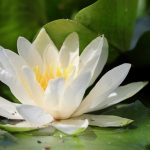
The edelweiss flower (in German, “pure white”), blooms only in the high mountains, where the air is pure, because it withers at the slightest contamination. In the same way, love cannot be lived fully in an atmosphere clouded by egoic interference.
Whether we speak of love as the emotion we experience when we feel intense affection for a person or a thing, or of altruistic love, or of that deeper love we describe as spiritual or universal, consciously or unconsciously, with greater or lesser subtlety, love is often clouded by other emotions, attachments, interests or hidden needs that prevent us from living it fully.
We constantly speak about love because it is a sweet-sounding word that makes us feel good. But if we are not aware of the interferences, we will not really know what we are talking about when we talk about love.
By observing ourselves honestly, even just a little, it is not difficult to realise that, in every case, the root of all these disturbances is the personal prism, the egoic gaze – in short, identification with the sense of individuality – which deprives us of fully living the love that is, in truth, inherent in our most intimate nature.
The desire for compensation
When egoic impulses have not yet been harmonised, love is clouded by emotions and desires connected with expecting something in return: we seek to be loved, to be valued, or we want personal needs or shortcomings to be satisfied. More or less overtly, we expect compensation. And we do so in virtually every kind of interpersonal relationship: in romantic love, between parents and children, between siblings or friends. But when we do not obtain what we expect, conflict and suffering arise, in the form of disappointment, jealousy, mistrust, fear of not being loved, low self-esteem, emotional blackmail, and the desire for control, dominance or possession. What, then, remains of what we called love?
When we speak of romantic love as it is commonly understood today, we carry with us a whole series of connotations that intoxicate and condition the clear experience of love. To begin with, we identify love with falling in love, when the latter is nothing more than a temporary altered state of consciousness – a mechanism of biological evolution designed to induce and favour mating and reproduction of the species. A cocktail of mental, emotional and sexual energies which, in the form of hormones and neurotransmitters, transports us to a cloud we do not wish to come down from: everything is beautiful and pleasurable; nothing about our partner bothers us. But shortly afterwards, whether the objective has been achieved or not, the altered state of consciousness disappears. Infatuation is temporary, though it can be addictive. If we are not aware of this, we can become trapped in a vicious circle between the constant pursuit of euphoric effects and the emptiness that follows when they fade.
Moreover, romantic love feeds the belief that we are incomplete and that we need someone else on whom to place the responsibility for making us happy, instead of seeking fulfilment for ourselves. It reinforces the belief that love consists of giving and receiving. And, to make matters worse, it normalises the idea that suffering is inherent in loving. But is love the source of suffering? Or is it frustrated expectations that cause us to suffer?
Altruistic love
When the cruder dynamics of love based on compensation become obvious to us, we then speak of altruistic love, supposedly free from the desire for returns. Certainly, this is a step forward, but it often turns out that the expectations are simply more subtle.
It is said that a mother’s love for her children is the most selfless and the closest to pure love. Indeed, it can be. But how does the biological instinct to procreate interfere? Or might we be filling a vital void with a child who gives meaning to our life? What real motivation lies behind the pressing desire to have children at all costs? Do we place the responsibility for our decision on our children? Do we generate in them a sense of indebtedness for our dedication? Do we expect some form of recognition?
We have been told: “love your neighbour as yourself”. Certainly, as guidance, this is far more accurate than the law of retaliation: “an eye for an eye, a tooth for a tooth”. But love, empathy and compassion do not arise from following a moral guideline or complying with a code of conduct. Love arises from lived experience, not from obedience.
On the other hand, what does it mean to love oneself? Where is the point of balance, the boundary between excess and lack of self-esteem? What I consider love according to my own criteria does not have to be the same for everyone. If we continue to speak of self and other, and of how we love and wish to be loved, we will be perpetuating the concept that love is a matter of giving and receiving – that is, the love that expects compensation we reflected on earlier.
Universal love
In an attempt to transcend all these interferences in order to live love, we end up speaking of spiritual or universal love that transcends us as individuals.
Certainly, love transcends individualities. But if we remain attached to the sense of individuality, when we speak of it we will often do so only from an idealised conception, driven by the subtle need to find meaning in life or to sweeten the trials and contradictions that living entails.
Deep down, we seek to feel better, more evolved, more spiritual… and this, paradoxically, continues to deprive us of fully living love.
The fog of individuality
It is not being suggested that there exists a pure, authentic love beyond our reach, requiring us to do something extraordinary to experience it. On the contrary. At every moment we have been speaking of forms of a single love, authentic and natural in themselves. What is being pointed out is how the fog of individuality creates the interferences that prevent us from living love as it truly is.
The sense of self is deep-rooted and resists relinquishing its privileged role. It mutates, changes its guise, finds subtle and convoluted arguments to maintain and nourish the belief in having a separate existence distinct from LIFE.
But love is inherent in the Nature of LIFE, and therefore love does not fragment, does not exclude, does not differentiate, does not create distinctions between this and that, between you and me, between what is right or wrong…
Love is neither given nor received. It knows nothing of contracts. It is not negotiated. It is lived.
Love is not a refuge to avoid what we do not like. It is not a lens through which to see life in rosy colours. It is not a cloying sweetener to sugarcoat bitter passages and give meaning to life.
Love does not arise from obeying ethical or moral precepts. It is not a choice. It is not a personal option. It is lived or not.
We are LIFE, and therefore love is also inherent in our most intimate nature. Only when we let go of clinging to and identifying with the sense of self does love naturally blossom in all its splendour.
Let us ask, then, who it is that loves: is love “mine”, or is it the love of LIFE itself that is expressing itself?
Nothing more is needed.